

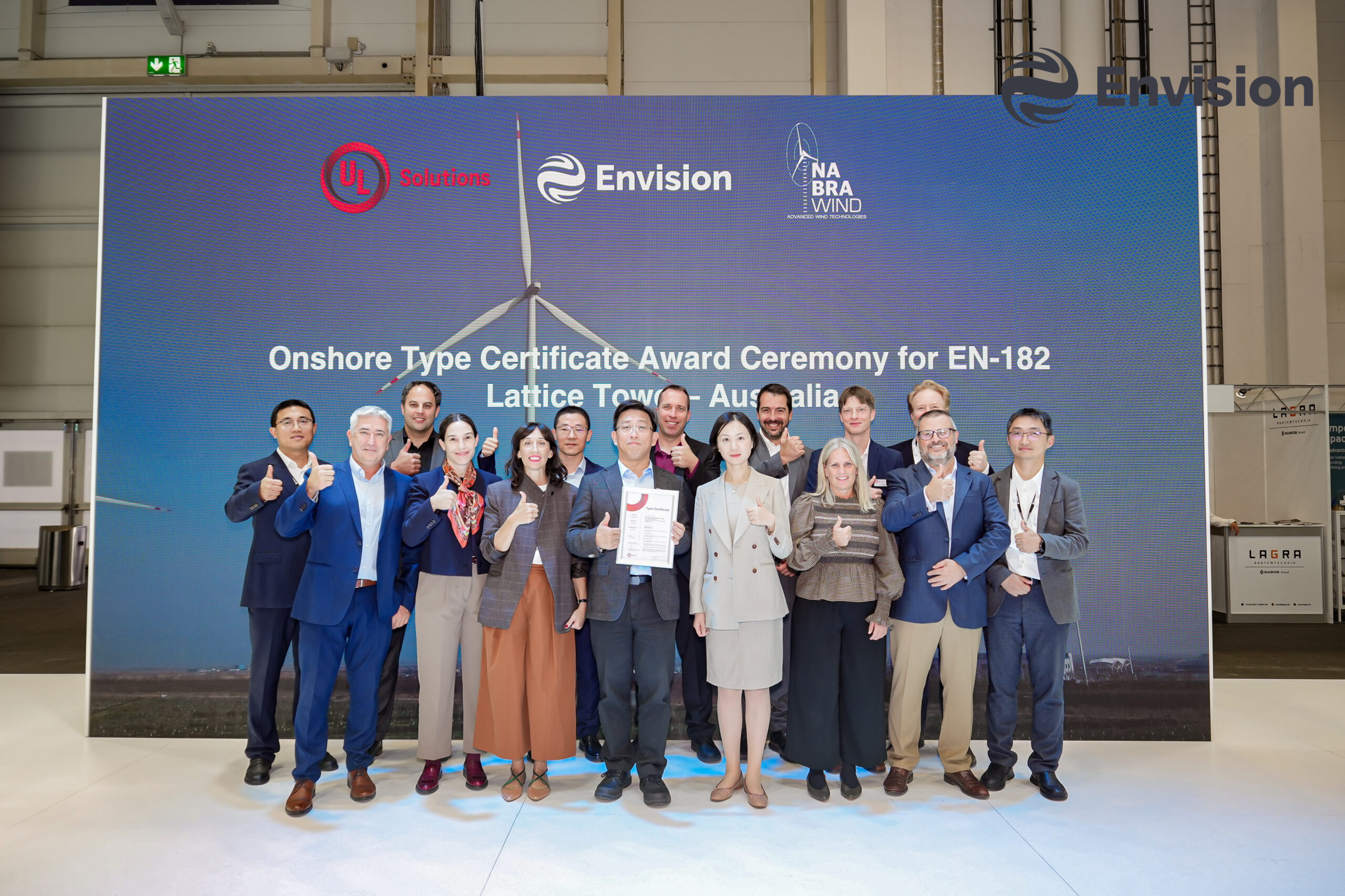
Envision incorporates Nabrawind’s 188 m tower into the Type Certificate for its EN182-7.8 MW wind turbine
The certificate issued by UL Solutions covers the EN182-7.8 MW wind turbine combined with the Nabralift 3.MAX HH188 tower, supporting its technical assessment, financing and insurance
The certified configuration is already being supplied for Fortescue’s Nullagine Wind Project
Nabrawind has reached a new milestone in the commercialisation of its tower technology: UL Solutions has issued the Type Certificate for Envision’s EN182-7.8 MW wind turbine combined with the Nabralift 3.MAX HH188 tower. The certificate was officially presented at WindEnergy Hamburg, marking an important step towards the wider commercial deployment of the configuration. The certificate places this configuration on an equal footing with a conventional wind turbine, providing an internationally reviewed technical basis for procurement, financing and insurance processes.
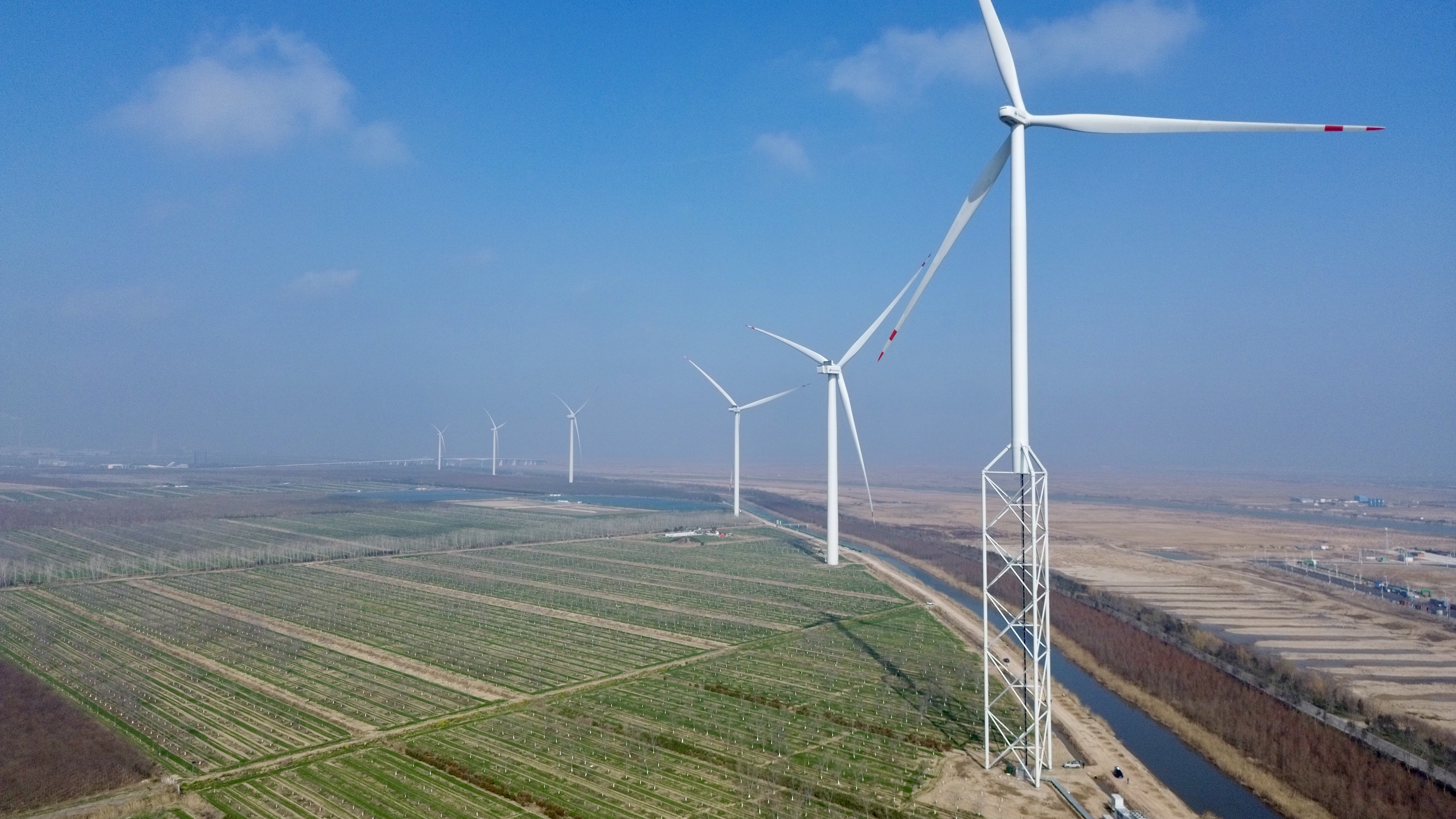
With a hub height of 188 metres, the certified wind turbine reaches the highest certified hub height achieved to date in the onshore wind industry. Combined with its 182-metre rotor diameter and 7.8 MW rated power, this configuration is ideally suited to low-wind sites.
“This certificate establishes our technology as a standard, mature solution and enables us to offer the international market, with a particular focus on key regions such as Latin America, state-of-the-art wind turbines capable of overcoming the most complex logistical and installation challenges. Our collaboration with the Envision team has been excellent, and we are fully prepared to deploy this configuration on a large scale,” said Eneko Sanz, CEO of Nabrawind.
“By combining Envision’s EN182-7.8 MW turbine with Nabrawind’s Nabralift technology, we are expanding the possibilities for high-capacity onshore wind in challenging sites. The UL Solutions Type Certificate provides an important technical foundation for the commercial deployment of this configuration, giving customers greater confidence across project development, financing and long-term operations. This milestone also demonstrates how technology collaboration can turn innovative solutions into scalable, bankable projects for markets around the world,” added Yimin Lou, Senior Vice President and Chief Product Officer of Envision Energy
Nullagine Wind Project
Following the installation of the first wind turbine using this configuration in China in 2025, Nabrawind and Envision have supplied 17 EN182-7.8 MW units with Nabralift 3.MAX HH188 towers for the 133 MW Nullagine Wind Project, currently under construction in the Pilbara region of Australia.
The project is being developed by Fortescue as part of its Real Zero strategy, which aims to achieve the complete decarbonisation of its mining operations.
Nabralift: a key technology for high capacity wind turbines
Nabralift is a modular, self-erecting wind turbine tower that enables the installation of onshore wind turbines exceeding 8 MW at hub heights of more than 200 metre anywhere in the world.
Access to stronger and more consistent winds increases energy production, while the installation of the complete wind turbine without large cranes (even at wind speeds of up to 15 m/s) and the removal of the main logistical barriers reduce transport and installation costs.
The combination of increased energy production and lower logistics and installation costs reduces the levelised cost of energy (LCOE) of wind projects by between 5% and 10%.
A rigorous certification process
The new certificate represents a major step forward in a certification journey that has progressed through several stages. As an initial milestone, UL Solutions awarded the Component Certificate to the Nabralift tower family, which was presented at WindEurope 2024.
In 2025, Envision subsequently installed a prototype of its EN182-7.8 MW wind turbine on the Nabralift HH188 tower at its testing facilities in Sheyang, Jiangsu Province, China. With a hub height of 188 metres, the prototype enabled the integration of the tower and wind turbine to be validated and the tests required as part of the certification process to be conducted.
The certification process was completed using operational data from the turbine, which has been running continuously for six months in accordance with the expected design parameters.
Issued by UL Solutions, the certificate confirms the successful completion of the conformity assessment process established under IEC 61400-22, in accordance with the technical requirements of the international IEC 61400-1 Ed. 4 standard.